Low-Earth Orbit satellites represent a fundamental shift in how satellite communications work. Unlike traditional geostationary satellites that orbit at 35,786 kilometers above Earth, LEO satellites operate at altitudes between 340 and 2,000 kilometers. This difference in altitude has profound implications for performance and capability.
The most immediate benefit of LEO satellites is reduced latency. Because signals travel shorter distances, the round-trip time for data is measured in tens of milliseconds rather than hundreds. This makes LEO satellite internet suitable for applications that require real-time responsiveness, something that was never possible with traditional satellite internet.
However, operating at lower altitudes also means that individual satellites cover smaller areas and move across the sky quickly. This is why LEO constellations require hundreds or thousands of satellites working together to provide continuous coverage. SpaceX's Starlink constellation, for example, plans to eventually include tens of thousands of satellites.
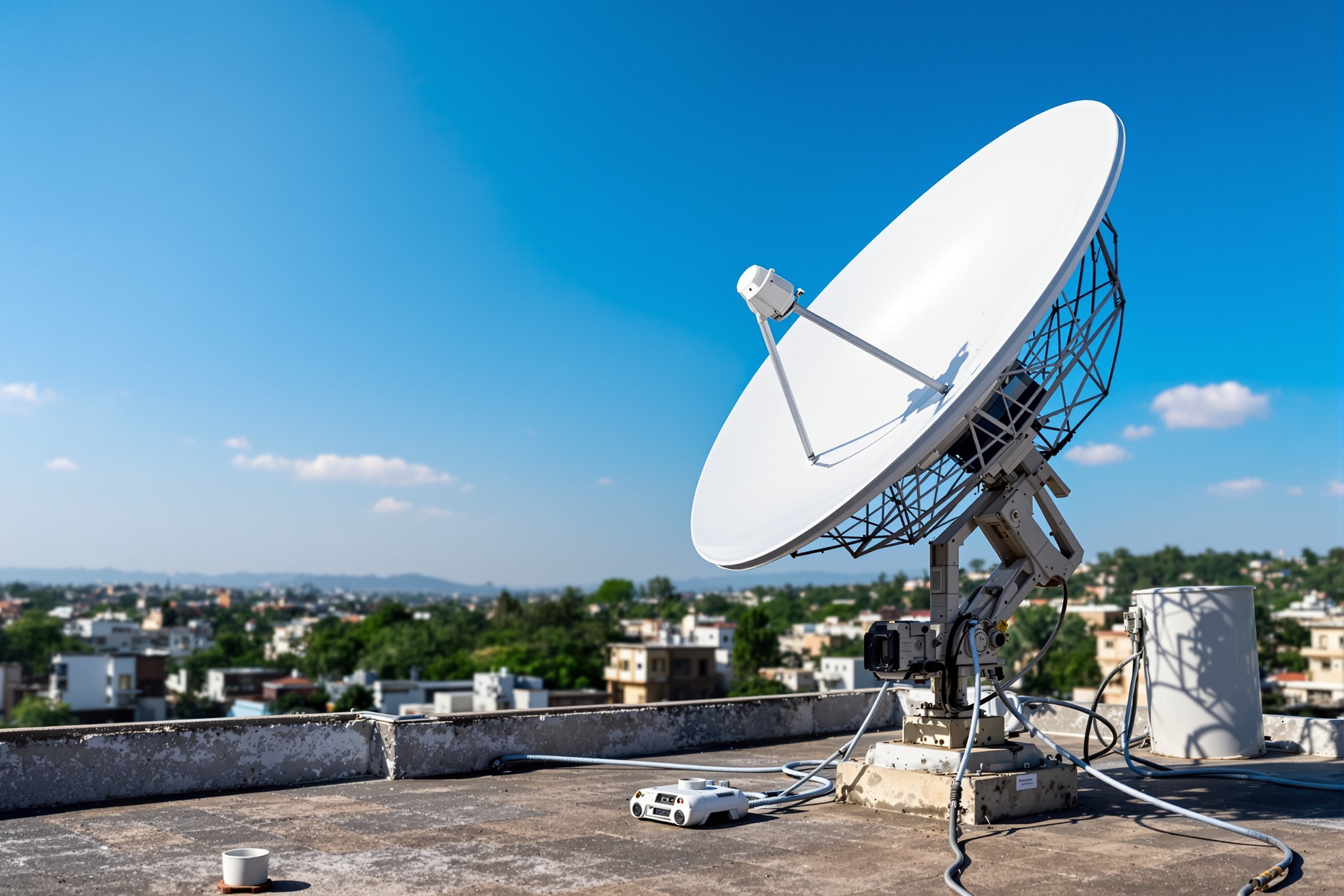
The technology required to track and communicate with these fast-moving satellites is sophisticated. Ground equipment uses phased array antennas that can electronically steer their beam to follow satellites as they pass overhead. When one satellite moves out of range, the system seamlessly hands off the connection to another satellite that's coming into view.
From a network architecture perspective, LEO satellites function more like cellular towers in the sky than traditional satellites. They form a mesh network where satellites can communicate with each other, routing data through the constellation to reach its destination. This creates redundancy and flexibility that wasn't possible with older satellite systems.
The economics of LEO satellites have also improved dramatically. Reusable rockets from SpaceX have reduced launch costs significantly, making it economically viable to deploy large constellations. Manufacturing advances have reduced the cost of individual satellites, and economies of scale continue to drive costs down as production volumes increase.
For consumers, especially those in rural areas, LEO satellites represent a game-changer. They provide internet speeds and latency comparable to terrestrial broadband, finally bringing rural areas into parity with urban centers. When combined with DISH's terrestrial network, the result is connectivity that works everywhere, all the time.